Archived. We measured this compost pile from October 14 to October 25, 2026. On October 25 all three thermometers moved into a raised bed, which is composting; its live readings are on the home page. This page stays up as a record of the pile.
The compost pile, Oct 14–25, 2026
A compost pile makes its own heat: billions of microbes break down kitchen scraps and garden plants and warm the pile from the inside. We pump water through a coil buried in the pile to carry some of that heat away, and three thermometers showed where the heat was. How the thermometers moved →
Pile log
- Loading…
Where the thermometers were, Oct 24–25
- 1In the raised bed, which is composting. The Wi-Fi board.
- 2In the compost pile. A small battery board that reports over Bluetooth every 5 minutes.
- 3In the compost pile, out of the reservoir water from October 24.
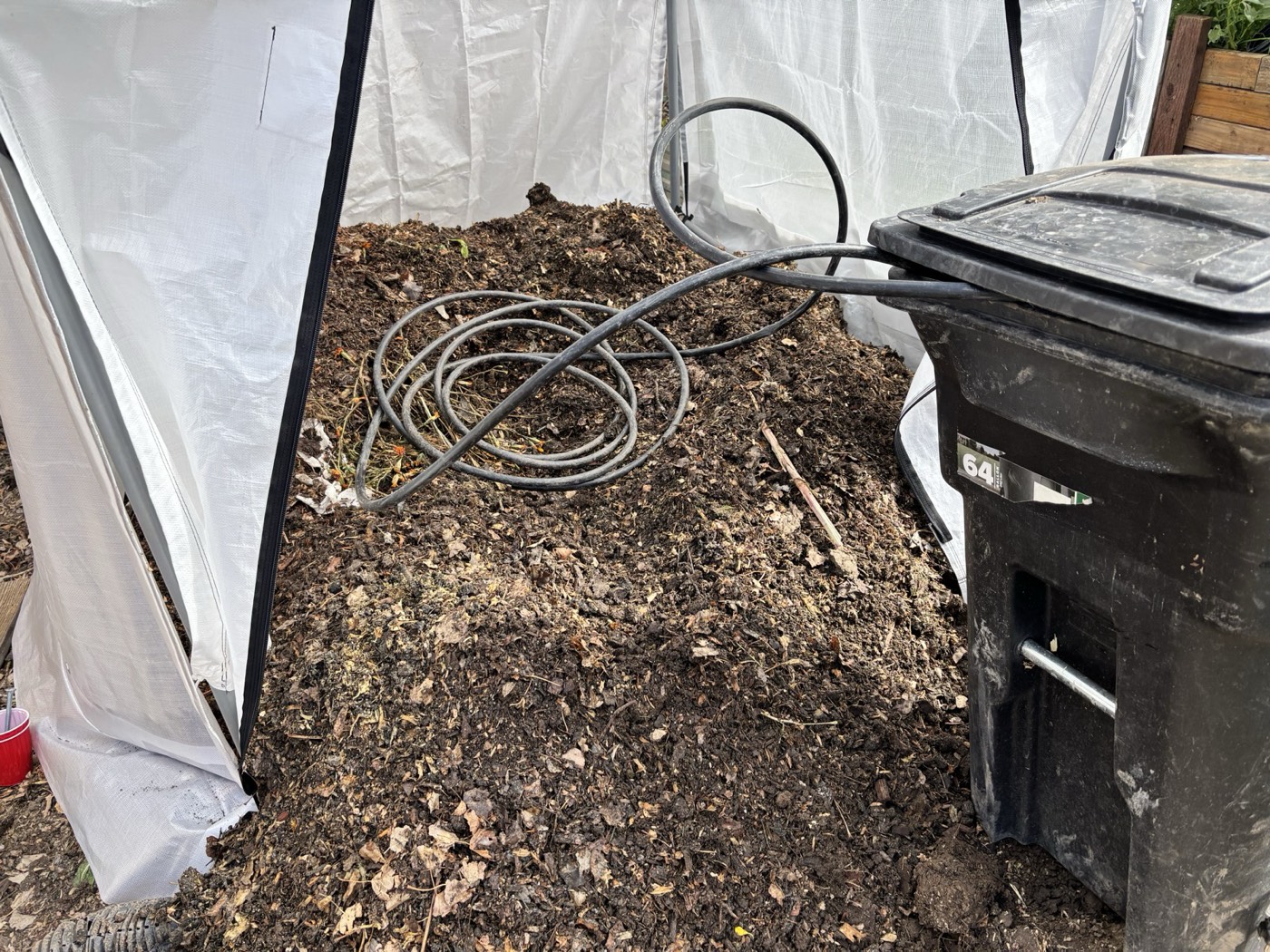
The pile and water loop setup, Oct 20–24
- 1Deep in the pile. The hot core, where the microbes work hardest. This is usually the highest number.
- 2Shallow, near the top. Closer to the cool air, so it reads lower and changes more with the weather.
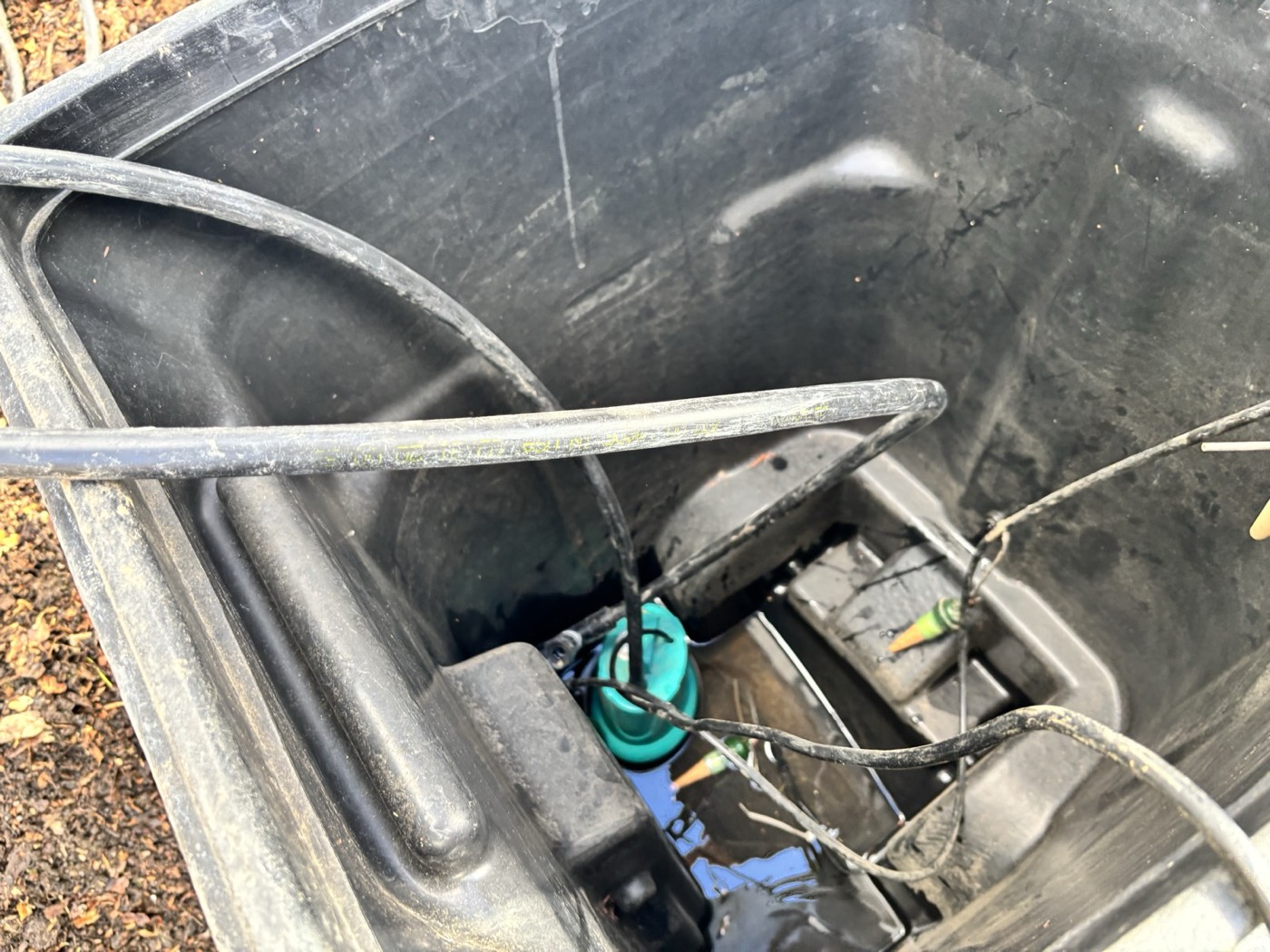
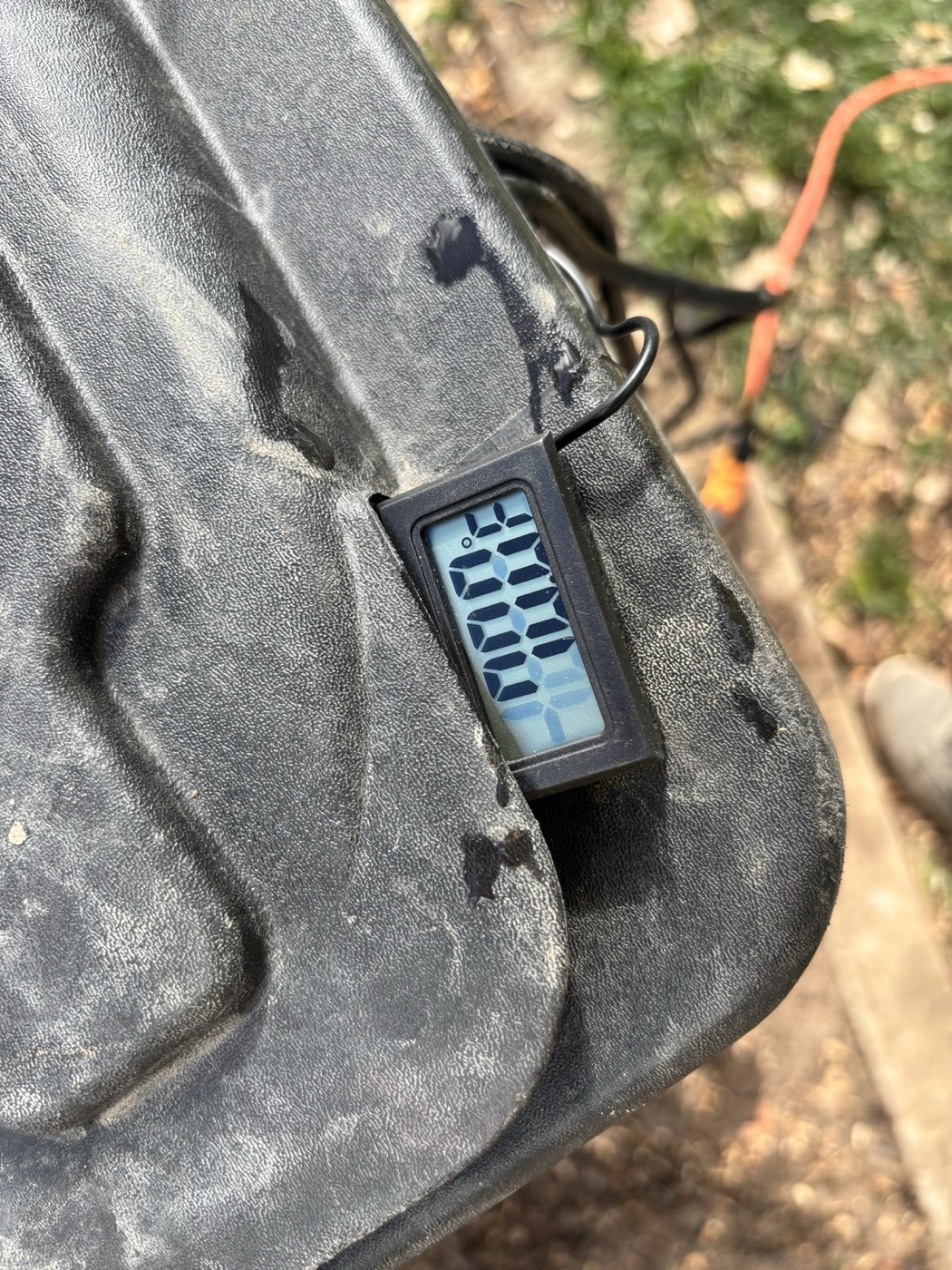
- 3In the reservoir water, near the top of the bin. The water after it has flowed through the coil in the pile. The thermometer on the bin's lid shows the same water.
How the water loop works
- A small pump sits at the bottom of a 64-gallon bin full of water next to the pile.
- It pushes the water through black poly tubing that coils through the compost.
- As the water passes through the hot pile it picks up heat, then flows back into the bin. It is a closed loop: the same water goes round and round.
- The bin also has a small electric heater, so the water can be warmed on purpose. Its thermostat goes by a thermometer in the water, so it only runs while one is there. The log above notes when the heater and pump are on.
- So the warmer the bin gets compared with the air, the more heat the pile is giving away. That heat could warm a greenhouse bed or plant roots, and it also keeps this clay-heavy pile from getting too hot.
Photos
Reading the numbers
- Two thermometers in the pile show how much the temperature changes from one spot to another. The outside of a pile loses heat to the air, so a probe near the surface reads lower.
- The raised bed (thermometer 1) is composting too, but a bed is shallower and loses heat faster than a pile, so expect it to read lower.
- 131°F (55°C) held for three days is the level that kills plant diseases and weed seeds. Our ¾-clay pile is kept below about 150°F.
- Each thermometer is a waterproof DS18B20 probe. Number 1 is on a Wi-Fi board (in the raised bed, reporting every minute); numbers 2 and 3 are on small battery boards in the pile that report over Bluetooth every 5 minutes.